

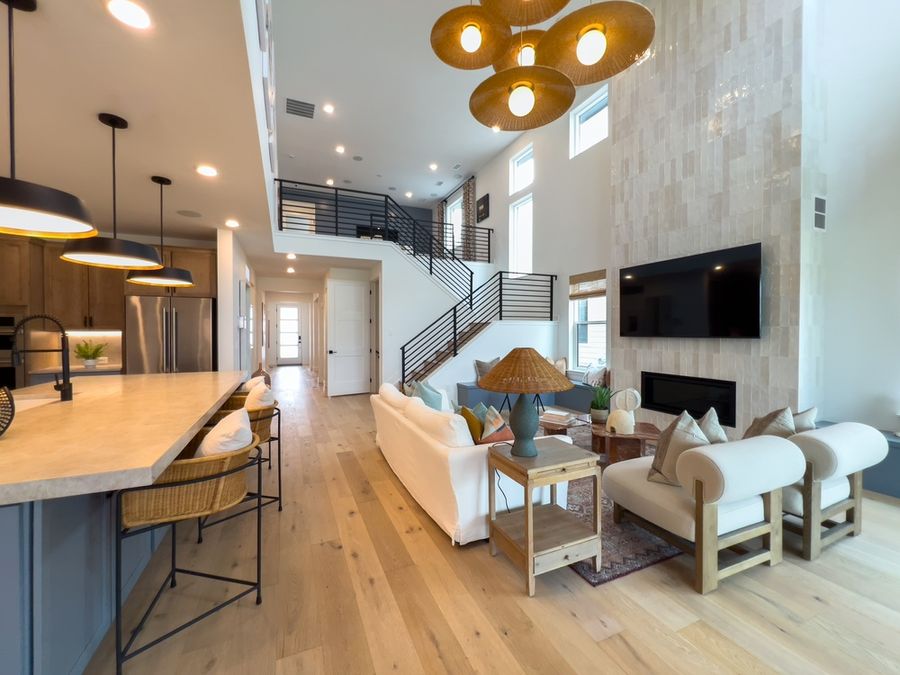
Open-concept living areas promise an airy, modern feel, but without the right design moves, they can end up feeling more like a hotel lobby than a home. The trick is making one big space feel like several smaller, more intentional ones, each with its own purpose and personality. With a few smart choices around layout, lighting, and texture, you can turn even the most cavernous floor plan into a warm and welcoming retreat that everyone wants to hang out in.
Use Area Rugs to Define Separate Zones
Area rugs are one of the easiest ways to break a big open room into smaller, purpose-driven zones. A large rug under the living room furniture instantly signals "this is the lounge area," while a separate rug under the dining table marks where meals happen. The visual boundary helps your eye process the space in chunks rather than as one giant room, which makes the whole layout feel more grounded.
When picking rugs, go big or skip them entirely. A too-small rug looks like an afterthought and actually makes the space feel choppier than it really is. Aim for a rug large enough that the front legs of your main furniture sit on it. Mixing patterns is totally fine, just keep the color tones consistent so the zones still feel like one cohesive home.
Anchor Every Zone with Layered Lighting
Lighting is the secret element of cozy open-concept design. Overhead recessed cans, or pot lights, alone create that flat, office-like glow that strips warmth out of a room fast. Instead, layer your lighting in every zone. A pendant or chandelier over the dining table, table lamps flanking the sofa, a floor lamp tucked next to a reading chair, and under-cabinet lighting in the kitchen all work together to create pools of warmth.
Bulb temperature matters too. Stick with warm white bulbs (around 2,700K) for living and dining areas to keep things inviting and soft. Dimmer switches are worth every penny because they let you shift the entire mood from a bright morning workspace to a soft evening hangout with a single twist of the dial.
Choose a Cohesive Color Palette
A unified color palette is what holds an open-concept space together visually. Pick three to five colors total, including one or two neutrals, a main accent, and maybe one or two secondary tones to play with. Use the same palette across every zone, but vary how much of each color shows up. Your kitchen might lean heavily on the neutral, while the living room layers more of the accent through pillows, throws, and art.
That doesn't mean everything has to match exactly. Slight variations in wood tones, fabric textures, and finishes actually make a space feel collected over time rather than purchased all in one weekend. Pinterest can be helpful for testing color combinations, but stick to a few main inspiration photos so you don't get pulled in too many directions.
Layer Textures for Warmth and Depth
Texture is what gives a room that "I want to curl up here" feeling. Hard surfaces alone, like polished concrete floors, sleek countertops, and leather sofas, can feel cold and museum-like, no matter how well-designed they are. Adding soft, tactile elements warms everything up instantly. Think chunky knit throws, linen curtains, sheepskin draped over a chair, a woven jute basket, and velvet pillows.
Mix natural and refined textures for the most balanced look. Pair a smooth marble coffee table with a nubby boucle chair. Or, layer a fluffy area rug over hardwood flooring. You can also hang flowy linen drapes near a structured leather sofa. The contrast keeps things visually interesting and prevents the room from feeling too matchy or too sterile, which is a common pitfall in modern open spaces.
Use Furniture Placement to Create Rooms Within a Room
You don't need walls to create a sense of distinct rooms in an open layout. Smart furniture placement does most of the heavy lifting for you. Floating your sofa away from the wall, with its back facing the kitchen or entryway, creates an instant boundary between the living room and other zones. A console table behind the sofa adds even more separation and gives you extra surface space for lamps or decor.
That said, pay attention to traffic flow when you arrange things. Leave clear pathways that let people move easily from one zone to the next without weaving around chairs or coffee tables. A well-placed bench or pair of accent chairs can mark the transition between the living and dining areas, doubling as both functional decor and a soft visual divider.
Add Greenery and Natural Elements
Plants and natural materials are some of the fastest ways to soften an open-concept space. A tall fiddle leaf fig or olive tree can act almost like a piece of architecture, drawing the eye and filling vertical space that often goes ignored in big rooms. Smaller potted herbs in the kitchen, trailing pothos on a bookshelf, and a vase of fresh-cut branches on the dining table all add life and warmth instantly.
Beyond plants, lean into natural materials throughout your furniture and decor. Wood ceiling beams, rattan pendant lights, stone fireplaces, and woven baskets bring an organic feel that balances out the clean lines of modern open layouts. Even small touches like a wooden cutting board left out, a terracotta planter on the counter, or a stone serving board make a real difference.
Don't Be Afraid of Partial Walls and Architectural Features
Fully open layouts get all the buzz, but partial walls, half-walls, columns, and arched openings are quietly making a comeback because they add character without sacrificing flow. A half-wall between the kitchen and living room can hide countertop clutter while still letting light and conversation pass through freely. Decorative columns or wooden beams subtly define zones the way invisible borders do.
Built-in features also pull double duty in open spaces. A tall bookshelf that doubles as a room divider creates a cozy reading nook on one side and adds smart storage to the other. A two-sided fireplace can anchor both the living and dining areas at once. Adding even a little architectural detail brings the depth that completely flat open layouts often lack.
Make Statement Pieces Your Visual Anchors
Every zone in an open-concept space benefits from one strong focal point. Without it, the eye wanders, and the whole room can feel busy or unfinished. A bold piece of art above the sofa, an oversized pendant light over the dining table, or a statement kitchen island in a contrasting color all give each area something to revolve around visually.
The trick is balance. Too many statement pieces competing for attention create chaos rather than coziness. Pick one anchor per zone, then let everything else play a quieter supporting role. If your kitchen island is the showstopper, keep the living room's focal point a little more subdued.
A quick tip: Stand back and squint at the room occasionally to make sure no single area is shouting over the others.
Soften the Sound and Echo
One thing nobody warns you about with open-concept spaces is the noise. High ceilings, hard floors, and wide-open layouts bounce sound around in ways that can make conversations harder to follow, and the whole space feels less intimate. The good news is that fabrics and textiles are your friends here. Layered area rugs, heavy curtains, upholstered furniture, and soft throws all absorb sound naturally without disrupting the look.
Adding acoustic panels disguised as wall art is another clever trick, especially in modern spaces with lots of glass and concrete. Even bookshelves filled with books can dampen echoes surprisingly well. Pay attention to ceilings too. Wood beams or fabric pendant lights can break up the hard surfaces overhead and make the whole space feel quieter and more grounded.
Bringing It All Together for a Cozy, Connected Home
Designing an open-concept space that actually feels cozy comes down to intention. Each move you make, from rug placement to lighting choices to a partial wall here and there, should serve both the function and the overall feel of the area. The goal is a space where every zone has a purpose, every surface invites you to linger, and the whole layout still feels like one cohesive home.
Don't try to finalize everything at once. Live in the space for a few weeks, notice where the light falls and how you actually use each zone, then refine from there. Cozy is built slowly, with layers of texture, light, and personal touches that add up over time. Done right, an open-concept floor plan can absolutely feel as warm and welcoming as any traditional layout.