

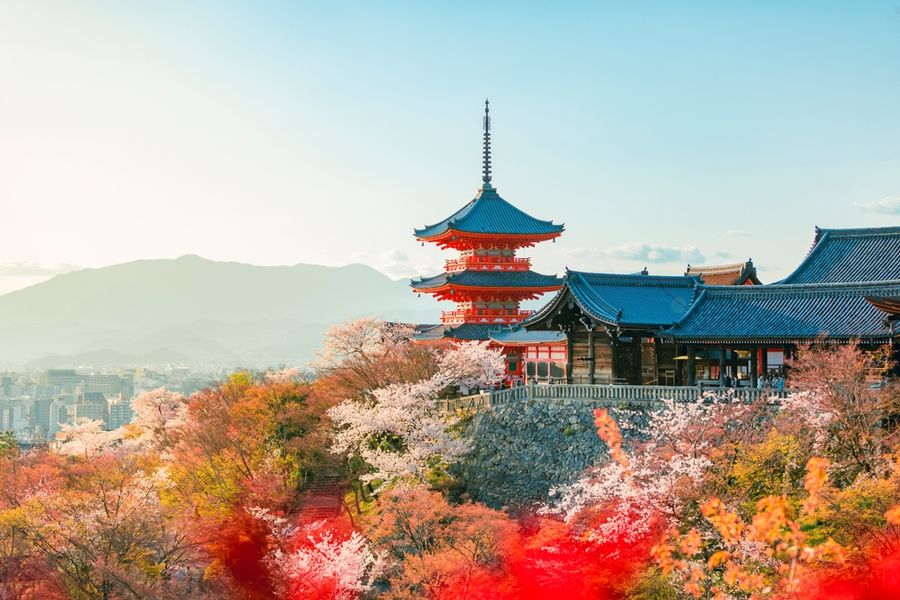
Japan has a way of leaving first-time visitors a little dazed in the best way. The neon-lit streets of Tokyo, the centuries-old temples of Kyoto, and bowls of ramen so good you'll dream about them later all live in one incredibly walkable, friendly country. Planning a first trip can feel overwhelming with so much to see, eat, and experience. But a little preparation goes a long way toward making the whole adventure smoother, more memorable, and packed with moments worth remembering.
When to Visit Japan
Timing matters more than people realize for a Japan trip. Spring (late March through early May) is famously beautiful thanks to cherry blossom season, though crowds are massive and prices climb sharply. Fall (October and November) is just as gorgeous when fiery red maple leaves take over the countryside, and the weather stays mild without summer's humidity. Both seasons book up far in advance, so plan accordingly.
Summer (June through August) is hot, humid, and a bit miserable in cities like Tokyo and Osaka, with the rainy season hitting hard in June. Winter (December through February) is surprisingly underrated. It's cold but rarely freezing in most of the country, hotels are cheaper, and snow in places like Hokkaido and Hakone is genuinely magical. Pick the season that matches your priorities for crowds, cost, and weather.
Tokyo: Where to Start Your Trip
Tokyo is overwhelming in the most wonderful way. As one of the world's largest cities, it packs in everything from quiet temple gardens to the world's busiest pedestrian crossing in Shibuya. Spend your first day getting your bearings by exploring neighborhoods like Shinjuku (electric and chaotic), Asakusa (old-school and traditional with the famous Senso-ji Temple), and Harajuku (youth culture and trendy fashion). Each feels like its own city within a city.
Don't try to see everything. Pick a few neighborhoods, walk a lot, and let yourself wander into shops and food stalls that look interesting. Visit Tsukiji Outer Market for breakfast sushi, explore teamLab Planets for an unforgettable digital art experience, and head up Tokyo Skytree or Shibuya Sky for unbeatable city views. Three to four days in Tokyo is the sweet spot for first-time visitors.
Kyoto: The Heart of Traditional Japan
After the buzz of Tokyo, Kyoto offers a striking contrast. Once the imperial capital, the city is home to over 1,600 Buddhist temples, 400 Shinto shrines, and entire historic districts that have barely changed in centuries. Walking through the bamboo forest in Arashiyama, hiking up to Fushimi Inari's thousands of red torii gates, and exploring the Gion geisha district feels like stepping into an entirely different world altogether.
Plan at least two to three full days in Kyoto. Many of the major sights are spread out, so a bicycle rental or smart use of the bus system saves a lot of walking. Don't miss Kinkaku-ji (the Golden Pavilion), Kiyomizu-dera Temple, and Nishiki Market, where you can sample local snacks and watch traditional vendors at work. Mornings are best for avoiding crowds at popular temples.
Osaka: Japan's Foodie Capital
About 15 minutes from Kyoto by bullet train, Osaka is louder, more casual, and obsessed with food. The local saying "kuidaore" roughly translates to "eat yourself broke," which gives you a sense of the local priorities. Dotonbori, the city's neon-soaked food and entertainment district, is a must-visit for the giant Glico running man sign and street snacks like takoyaki (octopus balls) and okonomiyaki (savory pancakes).
Osaka also makes a great base for day trips to nearby Nara, home to friendly deer that bow for crackers, and Himeji, where Japan's most beautiful original castle still stands. Stay one or two nights to experience the food scene properly. You'll likely find that the energy is more relaxed than in Tokyo, and the local dialect adds plenty of personality to your interactions with shop owners and chefs.
Beyond the Big Cities
While Tokyo, Kyoto, and Osaka cover most first-time itineraries, a few side trips really round out a Japan visit. Hakone, about 90 minutes from Tokyo, is famous for its hot spring resorts, ryokan inns, and stunning views of Mt. Fuji on clear days. A traditional ryokan stay with kaiseki dinner and onsen baths is one of the most quintessentially Japanese experiences you can have on a first trip.
Hiroshima is sobering and meaningful, with the Peace Memorial Park and Museum offering a perspective on World War II history. From Hiroshima, take the ferry to Miyajima Island, where the iconic floating torii gate appears to rest on the sea at high tide. Other worthwhile detours include Nikko, Kanazawa, and the Japanese Alps for travelers who love nature and want a slower pace.
Must-Try Foods in Japan
Food alone is reason enough to visit Japan. Ramen comes in dozens of regional styles, from rich tonkotsu in Fukuoka to soy-based shoyu in Tokyo. Sushi is best enjoyed at small counter spots where the chef hands you fish directly. Don't skip street food classics like takoyaki, taiyaki (fish-shaped pastries), and yakitori (grilled chicken skewers) at busy night markets and izakaya alleys.
Beyond the famous dishes, try kaiseki (a traditional multi-course meal that's almost an art form), tempura at a specialty restaurant, and conveyor-belt sushi (kaiten-zushi) for a fun, affordable meal. Convenience stores like 7-Eleven, Lawson, and FamilyMart deserve their cult following, too. Onigiri rice balls, egg sandwiches, and matcha sweets from konbini are genuinely delicious and ridiculously cheap, perfect for breakfast on travel days.
Getting Around with the Bullet Train and Beyond
Japan's transportation system is one of the most impressive in the world. The Shinkansen (bullet train) connects major cities at speeds up to nearly 200 mph and runs almost exactly on schedule. If you're traveling between multiple cities, a Japan Rail Pass can save serious money. Buy it before you arrive in Japan, since it's harder and more expensive to purchase once you're already in the country.
Within cities, subways and trains are extremely efficient and easy to use. Get an IC card (Suica or Pasmo in Tokyo, Icoca in Osaka) on arrival. The cards work on most public transit and many vending machines and convenience stores. Further, Google Maps gives accurate transit directions, including platform numbers and train colors. Finally, walking and biking are also great ways to explore most neighborhoods.
Tips for Navigating Japanese Etiquette
Japan has a reputation for politeness, and a few small gestures go a long way toward fitting in respectfully. Take your shoes off when entering homes, traditional restaurants, and many temples. Speak quietly on trains and never take phone calls in public transit. Don't eat or drink while walking on busy streets, since it's considered messy and impolite in most situations across the country.
Tipping isn't a thing in Japan. Trying to leave extra money can actually confuse or embarrass restaurant staff. Use both hands when handing over money or business cards, and bow slightly when greeting someone or saying thanks. Most Japanese people appreciate the effort, even if you don't get every custom right. A genuine smile and a few words of Japanese (like arigato gozaimasu) carry a lot of weight.
Practical Travel Tips
Japan is still surprisingly cash-based, especially outside major cities. Pull yen from 7-Eleven or post office ATMs, which reliably accept foreign cards. Many small restaurants, shops, and temples don't take credit cards at all. A portable Wi-Fi router or Japan-friendly SIM card is also essential since a data connection makes navigating signs and menus dramatically easier.
Pack light. Most hotels have small rooms, and luggage forwarding services (called takkyubin) make it easy to ship suitcases between hotels. That way, you can hop on a bullet train without lugging huge bags through busy stations. Bring comfortable walking shoes you can slip on and off easily. You'll likely walk 15,000 to 20,000 steps a day, and shoe removal happens way more often than you'd expect.
Starting Your Japan Adventure
A first trip to Japan is one of those rare travel experiences that completely lives up to the hype. The combination of futuristic cities, ancient traditions, mouthwatering food, and famously polite hospitality creates the kind of memories that stick with you long after you've come home. Be sure to plan ahead for the big logistics, but leave room for the small surprises. Some of the best moments come from wandering off-script down a quiet street.
Two weeks is the ideal length for a first visit, though even one week can capture a lot if you focus on Tokyo, Kyoto, and a one-day trip. Don't try to see everything on a single trip. Japan rewards return visitors, and many travelers find themselves quietly planning a second trip home before they've even left from the first one.