

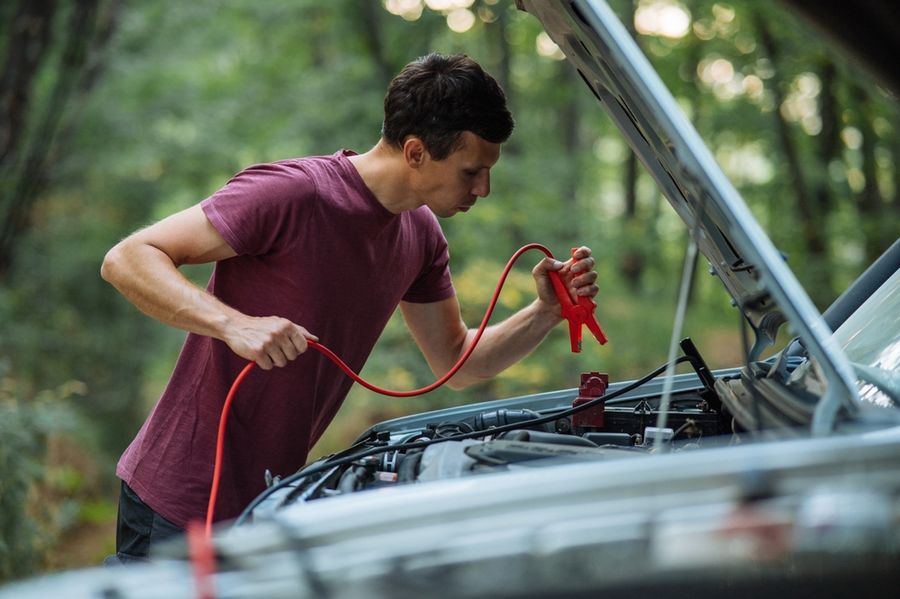
A dead car battery can ruin an otherwise normal morning faster than just about anything else. Whether you left the headlights on overnight or your battery's just getting old, knowing how to jump-start your car safely is one of the most useful skills any driver can have. Done right, jump-starting is quick, easy, and harmless. Done wrong, it can damage your battery, your electronics, or worse, give you a nasty shock! The good news is that the process is more straightforward than you'd think.
What Causes a Car Battery to Die
Car batteries die for plenty of reasons, and most of them are surprisingly common. Leaving headlights, dome lights, or accessories on overnight is one of the biggest culprits. Even a slightly open trunk light can drain a battery if left for hours. Cold weather also takes a heavy toll, since freezing temperatures reduce the battery's chemical efficiency and make it work harder to start your engine.
You'll also see batteries fail simply because of age. Most car batteries last between 3 and 5 years before they start losing reliability. Corroded terminals, loose connections, or a failing alternator can also lead to dead batteries. If you've jump-started your car multiple times recently, it's a sign the battery (or charging system) needs to be tested and possibly replaced.
Safety First: What to Check Before You Start
Before you connect any cables, take a moment to inspect both batteries. Look for visible cracks, leaks, swelling, or heavy corrosion. A damaged battery should never be jumped, since it could leak acid or even rupture. If you see a frosted or icy surface, the battery may be frozen, which means it's unsafe to jump and needs professional attention.
You'll also want to remove any metal jewelry like watches, rings, or bracelets, since they can conduct electricity. Make sure both cars are turned off, transmissions are in park (or neutral for manuals), and parking brakes are engaged. Taking just 30 seconds to do a quick safety check can prevent serious injuries and avoid expensive damage to either vehicle.
Gather the Right Tools
You'll need a good set of jumper cables or, even better, a portable jump starter. Jumper cables should be at least 10 to 12 feet long with thick gauge wires (4 or 6 gauge is ideal) to handle the necessary current. Cheap, thin cables can overheat or fail to deliver enough power. Keep your set in your trunk year-round so you're never caught without them.
You'll also want to consider keeping a portable jump-starter battery in your car. They're easy to use, safer than traditional cables, and great for emergencies. A small flashlight, gloves, and a clean rag are also helpful additions to your roadside kit.
Position the Cars Properly
If you're using jumper cables, position the working car so its battery is close enough to reach the dead one without stretching the cables. Most drivers park the two vehicles nose-to-nose, but in some cases, side-by-side works better depending on where each battery is located. The vehicles should never actually touch each other.
You'll want both cars turned off completely before you begin connecting the cables. Leaving either engine running while making connections can damage sensitive electronics or cause sparks. Engage both parking brakes and shift each car into park (or neutral for manual transmission cars). A flat surface is best to prevent any rolling. Take a moment to identify the positive (+) and negative (-) terminals on each battery before connecting anything.
Connect the Jumper Cables in the Right Order
The order in which you connect cables is critical. Start by clamping the red (positive) cable to the positive terminal of the dead battery. Then connect the other red clamp to the positive terminal of the working battery. Next, attach the black (negative) clamp to the negative terminal of the working battery.
You'll finish by attaching the final black clamp to an unpainted metal surface on the engine block of the dead car, away from the battery. Connecting the last clamp directly to the dead battery's negative terminal can cause sparks near hydrogen gas released from the battery, which can be dangerous. Following the correct order keeps you safe and protects both vehicles' electronics from damage.
Start the Working Car, Then the Dead One
Once all clamps are secure, start the working car and let it idle for a few minutes. The running engine sends a charge through the cables to the dead battery. Wait three to five minutes to allow some power to transfer before attempting to start the dead car. Patience is key here, since rushing can cause the start attempt to fail.
You'll then try starting the dead car. If it starts right up, let both vehicles run for at least 10 to 15 minutes before disconnecting anything. If the dead car doesn't start, wait another few minutes and try again. If multiple attempts fail, the battery may be too far gone, or the issue could be with the alternator, starter, or another part of the car.
Disconnect the Cables Safely
Once the dead car is running, disconnect the cables in the reverse order you connected them. Start by removing the black clamp from the unpainted metal surface of the previously dead car. Next, remove the black clamp from the working car's battery. Then remove the red clamp from the working car, and finally the red clamp from the previously dead car.
You'll want to be careful not to let the clamps touch each other or any metal surface while they're still attached at the other end. Sparks can fly if positive and negative connections meet. Once disconnected, neatly coil the cables and put them back in your trunk. Don't shut off the recovered vehicle right away. Drive it for at least 20 minutes to allow the battery to fully recharge.
How to Care for Your Battery After a Jump
Once your car is running again, your battery needs some help to fully recover. Driving for at least 20 to 30 minutes allows the alternator to recharge the battery completely. Short trips around the block won't be enough. If possible, take the long way home, hit the highway, or run errands that involve a longer drive to give the battery proper recovery time.
You'll also want to monitor the battery closely over the next few days. If the car struggles to start again, the battery may be too weak to hold a charge. Have it tested at any auto parts store, often for free, to check its condition. If it fails the test, replacing the battery is the safest move.
Getting Back on the Road With Confidence
Jump-starting a car may feel intimidating the first time, but once you know the steps, it becomes one of the most empowering skills a driver can have. With the right cables, a calm mindset, and a careful approach, you can rescue yourself (or someone else) from a dead battery in under 10 minutes. Knowing the process means you'll never have to feel helpless on a cold morning again.
You'll also save yourself the cost and time of a tow truck or roadside service in many cases. Keep jumper cables or a portable jump starter in your trunk year-round, and check your battery's age every so often to stay ahead of failures. A little preparation now makes those random "won't start" moments much less stressful and gets you back on the road with confidence.