

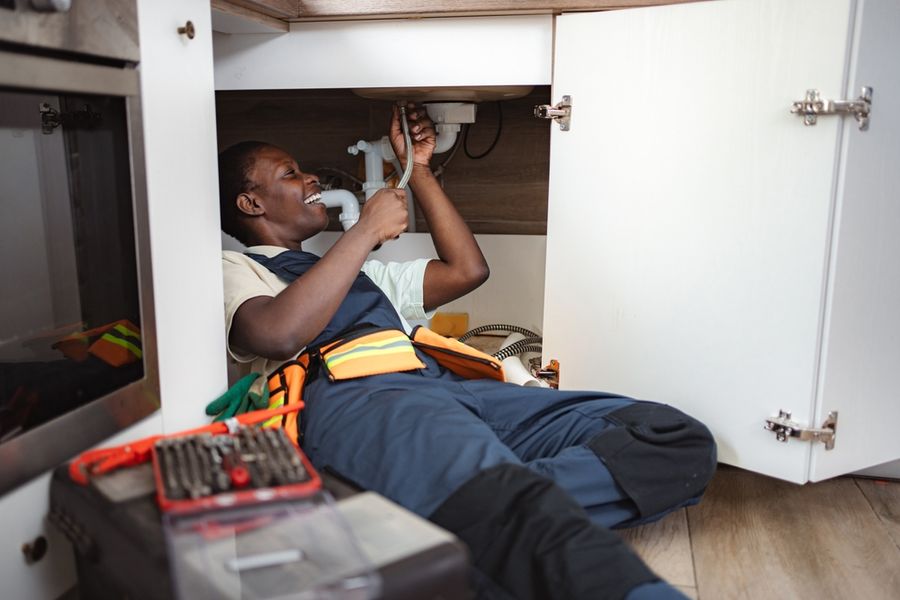
Plumbing is one of the most respected, in-demand, and well-paid trades in the country. Skilled plumbers keep homes, schools, hospitals, and businesses running, and the work simply can't be outsourced or replaced by AI. If you like hands-on problem solving, working with your hands, and earning solid money without a four-year degree, becoming a licensed plumber is worth considering. The path takes years of training, but the long-term rewards include excellent pay, job security, and plenty of room to grow.
What Plumbers Actually Do
Plumbers install, repair, and maintain water, drainage, and gas systems in homes, businesses, and industrial settings. The job goes way beyond fixing leaky faucets. Plumbers work on water heaters, sewer lines, septic systems, irrigation, fire suppression systems, and even medical gas piping in hospitals. Some specialize in residential work, while others tackle commercial or industrial projects.
You'll spend much of your day reading blueprints, troubleshooting problems, soldering pipes, and using a wide range of specialized tools. The work is physical, often requiring you to crawl into tight spaces, lift heavy materials, and stand for long hours.
Earn a High School Diploma or GED
The first step toward becoming a plumber is earning a high school diploma or GED. Most apprenticeship programs and trade schools require it, and certain math skills are critical for the job. Take classes in algebra, geometry, drafting, and shop if your school offers them. Strong math skills come in handy daily when calculating pipe lengths, pressure, and slope.
You'll also benefit from taking any vocational or industrial arts classes available. Schools that offer pre-apprenticeship or career and technical education (CTE) programs can give you a strong head start. Some high schools partner with local trade unions or community colleges, allowing students to earn industry certifications before graduation. The earlier you start exploring the trades, the easier it is to land an apprenticeship after high school.
Complete a Plumbing Trade or Vocational Program
While not always required, completing a trade school or vocational plumbing program can boost your chances of landing a great apprenticeship. Programs usually take one to two years and cover the basics of pipefitting, blueprint reading, plumbing codes, safety, and tool use. Community colleges and technical institutes around the country offer affordable options.
You'll graduate with foundational knowledge that helps you stand out when applying for apprenticeships. Some programs also offer credit toward your apprenticeship hours, shortening your total training time. Look for accredited programs through groups like the Plumbing-Heating-Cooling Contractors Association (PHCC) or local unions.
Apply for a Plumbing Apprenticeship
The most important part of becoming a plumber is the apprenticeship. Apprenticeships typically last four to five years and combine paid on-the-job training with classroom instruction. You'll work under licensed journeyman plumbers while learning the trade hands-on. Most apprenticeships require around 2,000 work hours and 144 to 200 hours of classroom training per year.
You'll find apprenticeship programs through local plumbers' unions, like the United Association (UA), or non-union options through groups like the PHCC and Associated Builders and Contractors (ABC). Apprenticeships are competitive, so apply to multiple programs if you can. Most require a basic skills test, an interview, and a clean background check. The pay starts modestly but rises consistently throughout the apprenticeship as your skills grow.
Build Hands-On Experience as an Apprentice
Apprenticeships are where the real learning happens. You'll start with simple jobs like cutting pipe, hauling materials, and assisting senior plumbers. Over time, you'll take on more responsibilities like installing fixtures, soldering joints, troubleshooting leaks, and working on entire plumbing systems. Every project teaches you something new.
You'll also learn about important areas like safety procedures, local building codes, customer service, and how to work efficiently on job sites. Apprenticeships expose you to a wide variety of settings, including residential, commercial, and industrial projects.
Pass the Journeyman Plumber Exam
After completing your apprenticeship, the next step is passing the journeyman plumber exam to officially become licensed. Exam requirements vary by state, but most cover topics like plumbing codes, safety, materials, system design, and installation techniques. Some states require additional hands-on testing in addition to a written exam.
You'll typically need to provide proof of your apprenticeship hours, classroom training, and identification when applying. Many apprentices use study guides, online courses, or local trade union resources to prepare. The International Code Council (ICC) also offers practice exams and reference materials. Passing your journeyman exam is a major milestone that allows you to work independently as a licensed plumber.
Get Your Plumbing License (and Stay Current)
Each state, and sometimes individual cities, has its own licensing requirements for plumbers. After passing your journeyman exam, you'll apply through your state or local licensing board, often with additional fees and background checks. Some states issue licenses at multiple levels, including apprentice, journeyman, and master plumber, with each requiring different levels of experience and testing.
You'll also need to renew your license regularly, often every one to three years. Many states require continuing education hours focused on updated plumbing codes, safety changes, or new technologies. Staying current is important not only for legal reasons but also to keep your skills sharp. Codes evolve constantly, especially around water conservation, green plumbing systems, and gas line standards, so ongoing learning is part of the job.
Consider Specializations and Master Plumber Status
Once you're a licensed journeyman, you can specialize in areas like gas piping, medical gas systems, sprinkler systems, sewer and septic work, or commercial pipefitting. Specializing often comes with higher pay and unique job opportunities. Many plumbers also pursue master plumber status, which usually requires several years of journeyman experience and an additional exam.
You'll find that master plumbers can work independently, run their own businesses, and supervise journeymen and apprentices. Becoming a master plumber opens doors to contracting, project management, and even teaching the next generation of plumbers.
What Plumbers Actually Earn
Plumbing offers strong earning potential, especially for experienced workers. According to the College Board, the median annual wage for plumbers, pipefitters, and steamfitters is $60,843, with the top 10 percent earning $109,474. Apprentices start around $40,000 per year and gradually earn raises as they progress.
You'll find that plumbing pay varies by region. Plumbers in states like Illinois, Alaska, Massachusetts, and New York tend to earn more, sometimes exceeding $90,000 annually. Union plumbers often earn higher wages, plus benefits like pensions, health insurance, and overtime pay. Many plumbers eventually start their own businesses, where six-figure incomes become very achievable. Unlike many careers, plumbing rewards experience and skill significantly over time.
Building a Long Career in the Trades
Becoming a licensed plumber takes years, but the trade offers one of the most stable, rewarding, and respected career paths out there. Skilled plumbers will always be needed, and the combination of hands-on work, problem-solving, and good pay makes the job a smart choice for anyone considering an alternative to a four-year degree. The path is structured, achievable, and built to last.
You'll also have lots of options to grow over time. Whether you specialize in green plumbing, take on master plumber status, run your own business, or train future apprentices, plumbing keeps opening new doors. The trades are seeing a renewed wave of respect, and now's a great time to enter the field. With patience and dedication, you can build a long, prosperous career one job at a time.