

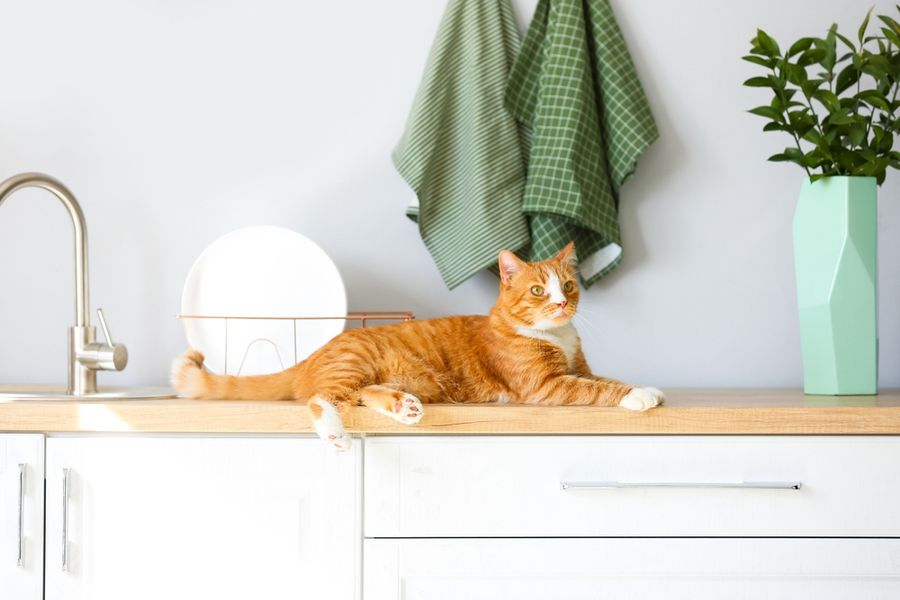
If you've ever walked into your kitchen to find your cat strolling across the counter like they own the place, you're not alone. Counter-surfing is one of the most common (and frustrating!) cat behaviors out there, and one many owners struggle to break. The good news is, with a little patience and the right strategies, you can train your cat to stay off counters for good, no yelling or harsh punishment required.
Why Cats Love Kitchen Counters So Much
Counters are basically cat heaven. They're high, they have a great view, and they often smell like food. Cats are natural climbers and love being up where they can survey their territory. Add in the bonus of leftover crumbs, dripping faucets, or warm spots near appliances, and your kitchen counter becomes pretty much irresistible.
You'll also want to remember that counters provide safety. A cat sitting on a high surface feels in control, away from kids, dogs, or vacuum cleaners. Counter-surfing isn't your cat being bad. It's actually a sign that they're following deep, instinctual behaviors.
Give Them a Better Place to Climb
The single most effective way to keep your cat off counters is to give them somewhere else to go. Cats need vertical space, and if you don't provide it, the kitchen counter becomes their default option. Cat trees, wall-mounted shelves, window perches, and tall cat condos all offer elevated alternatives that meet their need to climb.
You'll want to place the alternatives in spots your cat actually enjoys, like near a window with a sunny perch or in a busy room where they can watch the household. Make the new spot more appealing than the counter with treats, catnip, or a soft blanket.
Remove Tempting Food and Smells
Cats are drawn to counters in part because they often find rewards up there. Crumbs, food packaging, raw meat, butter dishes, and even sponges that smell like dinner all keep your cat coming back for more. Once they've found food once, they'll keep checking the spot again and again.
You'll want to wipe counters down thoroughly after every meal and store food in sealed containers. Don't leave dishes in the sink, since dirty plates can be even more enticing than the counter itself. Trash cans should have lids that close securely. Eliminate every food-related reason for your cat to visit the counter, and you've already taken away a huge motivator for the behavior.
Use Texture They Don't Like
Cats are picky about textures, and you can use that to your advantage. Tin foil, double-sided tape, plastic carpet runners turned upside down, or specialty mats like the Sticky Paws sheets can all make counters less appealing. Most cats jump up, feel something weird under their paws, and decide it's not worth the trip.
You'll want to be patient and consistent. Some cats give up after a few tries, while others test the boundary repeatedly. Stick with it for at least two to three weeks. Keep in mind, environmental deterrents tend to work best when paired with positive reinforcement, so don't rely on textures alone. Make sure your cat has plenty of fun, safe places to go instead.
Try Motion-Activated Deterrents
For determined counter-surfers, motion-activated tools can make a big difference. Devices like the SSSCAT spray system release a quick burst of air or harmless mist when your cat jumps up. Other products use sound or vibration. The goal is to teach your cat that the counter itself is unpleasant, not that you're chasing them off.
You'll find motion-activated tools especially helpful when you're not home or out of the room. Cats often counter-surf when they think no one's watching. By making the counter itself a less appealing place even in your absence, you teach your cat to avoid it consistently. Pair the tool with appealing alternatives nearby so your cat learns where they can climb safely.
Use Positive Reinforcement
Punishment usually backfires when training cats. Shouting, spraying water, or chasing your cat off the counter teaches them to be afraid of you, not of the counter. Instead, focus on rewarding behavior you want to see more of. Catch your cat in the moment of choosing a cat tree, perch, or shelf, and offer a treat, praise, or a quick play session.
You'll be amazed at how quickly cats catch on when rewards are involved. Clicker training works well for cats, too, especially when you're teaching them to use a designated spot. The more pleasant alternatives you create, the less attractive the counter will seem.
Address Boredom and Lack of Stimulation
Cats who counter-surf are often bored. Without enough mental and physical stimulation, jumping on counters becomes part scavenger hunt, part adventure. If your cat doesn't have engaging toys, scratching options, or daily playtime, the kitchen becomes their personal entertainment park.
You'll want to schedule at least two short play sessions per day using interactive toys like wand teasers or feather toys. Puzzle feeders, treat balls, and rotating toys can keep your cat's brain engaged when you're not home. A satisfied, stimulated cat is far less likely to look for trouble.
Be Consistent With Everyone in the Household
Cats notice mixed signals, and inconsistent rules make training nearly impossible. If one family member shoos the cat off the counter while another sneaks them a treat there, your cat will keep trying their luck. Everyone in the home needs to be on the same page about counter rules and how to respond when the cat jumps up.
You'll want to set up a simple plan: no food on the counter when no one's around, immediate redirection if the cat jumps up, and rewards when they choose an approved spot. Make sure visitors know the rules, too. Even occasional reinforcement of the unwanted behavior can teach your cat to keep trying. Consistency turns short-term success into a permanent habit.
What Not to Do
Avoid using water spray bottles, loud noises, or physical punishment to train your cat. While these methods may seem to work in the short term, they often damage your bond, increase anxiety, and create new behavior problems. Cats associate fear with the person doing the punishing, not the action itself, which can lead to hiding or aggression.
You'll also want to skip products that use strong chemicals or essential oils as repellents. Many essential oils, including citrus and tea tree, are actually toxic to cats. Stick to positive reinforcement, smart environmental changes, and humane tools that teach without causing fear or stress.
Building a Counter-Free Routine That Sticks
Keeping your cat off the counter long-term comes down to changing the environment and providing better alternatives, not just saying no. With high perches, plenty of stimulation, deterrents on tricky surfaces, and consistent positive reinforcement, you'll see real progress within a few weeks. Once the new habits set in, your cat usually loses interest in the counter altogether.
You'll also enjoy a cleaner kitchen, fewer surprises during meal prep, and a happier cat who has spots designed just for them. Training a cat isn't about winning a battle. It's about understanding what your cat needs and redirecting their natural instincts in a positive direction. With time and patience, your kitchen counter will finally stay cat-free for good.