

When most people think of national parks, the same big names come up: Yellowstone, Yosemite, Grand Canyon, Zion. But the U.S. has 63 official national parks, and many of the most beautiful, least crowded, and most surprising ones rarely make the top of anyone's list. Skipping the famous spots can mean fewer crowds, easier permits, and entire trails to yourself. From volcanic landscapes to underground caves to islands you can only reach by ferry, the country's lesser-known parks deserve way more attention.
Great Basin National Park, Nevada
Tucked into eastern Nevada near the Utah border, Great Basin is one of the least-visited national parks in the lower 48, yet it offers some of the darkest night skies in the country. Stargazing here is unreal, with the Milky Way often visible to the naked eye thanks to the park's official Dark Sky designation.
You'll also find ancient bristlecone pines, some over 4,000 years old, as well as the famous Lehman Caves with their otherworldly limestone formations. The drive up Wheeler Peak Scenic Drive offers sweeping desert views, and you can hike up to alpine lakes or even summit the 13,000-foot peak itself. For solitude and stargazing, the Great Basin is hard to beat.
North Cascades National Park, Washington
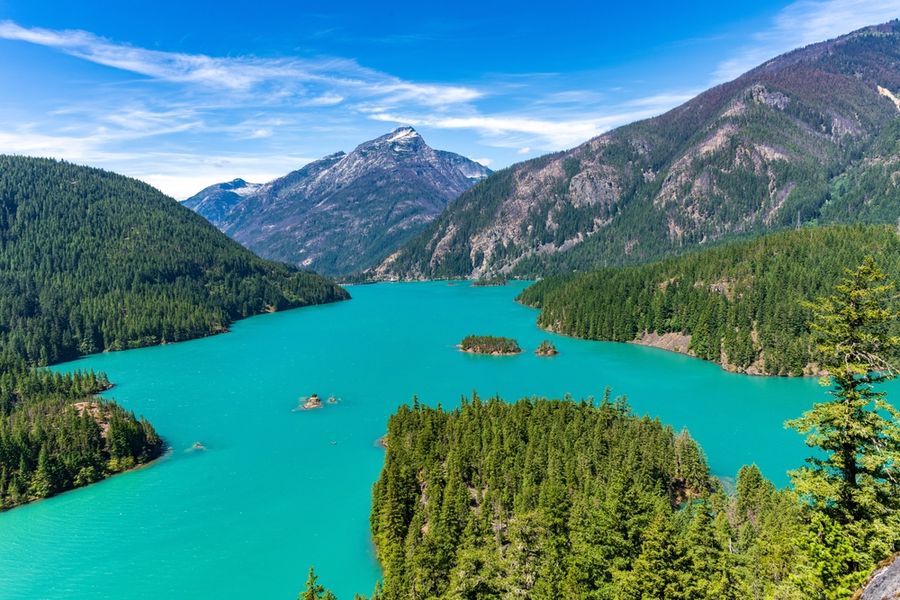
Often called the "American Alps," the North Cascades is one of the most jaw-dropping parks in the country, yet it only gets a fraction of the visitors that nearby Mount Rainier or Olympic see. The park is full of jagged peaks, more than 300 glaciers, and electric-blue alpine lakes that look almost too vivid to be real.
You'll have plenty of options here, from short scenic stops along Highway 20 to multi-day backcountry treks. The view from Diablo Lake Overlook is one of the most photographed spots in the Pacific Northwest, but most visitors don't venture much deeper. Hike to Cascade Pass, Maple Pass, or Hidden Lake for some of the best alpine scenery in the U.S.
Isle Royale National Park, Michigan
If you want true wilderness, Isle Royale is about as remote as a national park gets. Located in the middle of Lake Superior and only accessible by ferry, seaplane, or private boat, the park sees fewer visitors in a year than Yellowstone sees in a single day. The peace and quiet are unmatched.
You'll spend your time hiking, kayaking, or backpacking among moose, wolves, and untouched forests. There are no cars on the island, just trails, lakes, and the Lake Superior shoreline. The park is open seasonally, typically April through October, with peak access in the summer months. If unplugging from modern life sounds appealing, Isle Royale offers one of the most off-grid national park experiences out there.
Congaree National Park, South Carolina
Just outside Columbia, South Carolina, Congaree protects one of the largest intact old-growth bottomland hardwood forests in the country. The park feels like a different world, with towering bald cypress and tupelo trees draped in Spanish moss and a slow-moving river system you can paddle through.
You'll find easy walking via the popular Boardwalk Loop Trail, which keeps your feet dry above the swampy floodplain. For something more adventurous, paddle Cedar Creek through cypress tunnels and into untouched corners of the forest. The park is also famous for its synchronous fireflies, which put on a magical light show for about two weeks each May or June. Congaree feels nothing like the rest of the South.
Black Canyon of the Gunnison National Park, Colorado
Colorado has more famous parks like Rocky Mountain, but Black Canyon of the Gunnison is just as stunning and far less crowded. The park features one of the steepest, narrowest, and deepest canyons in North America. Some sections drop more than 2,700 feet straight down, with sunlight only reaching the canyon floor for a few minutes each day.
You'll find dramatic overlooks along both the South and North Rim Drives, with viewpoints like Painted Wall, Chasm View, and Sunset View ranking among the most breathtaking in the state. Adventurous travelers can hike into the canyon via steep, unmaintained routes or rock climb the legendary 2,250-foot Painted Wall. For raw, dramatic geology, Black Canyon delivers.
Channel Islands National Park, California
Often called the "Galapagos of North America," Channel Islands is a string of five rugged islands off the Southern California coast that feels completely untouched by modern life. You can only reach them by boat or small plane, which keeps crowds far smaller than parks on the mainland. There are no roads, no shops, and no Wi-Fi.
You'll spot island foxes, sea lions, bald eagles, and incredible kelp forests just offshore. Kayaking through sea caves on Santa Cruz Island is one of the most popular activities, along with hiking, camping, and snorkeling in clear Pacific waters. According to the National Park Service, fewer than 300,000 people visit each year, making it one of California's best-kept secrets.
Capitol Reef National Park, Utah
Utah's "Mighty Five" parks get a lot of attention, but Capitol Reef tends to fly under the radar compared to Zion or Arches. That's actually great news, because the park is packed with red rock canyons, ancient petroglyphs, slot canyons, and even a historic Mormon settlement called Fruita, where you can pick fresh fruit from the orchards in season.
You'll love driving the Scenic Drive and hiking trails like Hickman Bridge, Cassidy Arch, and Cathedral Valley. The park's famous Waterpocket Fold is a nearly 100-mile-long wrinkle in the Earth's crust that creates dramatic cliffs and canyons in every direction. Capitol Reef offers everything you love about Utah's parks, just with fewer crowds clogging the trailheads.
Voyageurs National Park, Minnesota
Located along the Canadian border in northern Minnesota, Voyageurs is unlike any other national park in the country. About 40 percent of the park is water, making it best explored by boat, kayak, or canoe. You can even rent a houseboat and spend a few nights drifting between islands and quiet inlets.
You'll find world-class fishing, ancient Native rock paintings, and incredible chances to see the northern lights, especially during fall and winter. The park is part of the International Dark Sky Association's Dark Sky Park program, so aurora viewing here can be spectacular. If you love wild lakes, peaceful starry nights, and boating culture, Voyageurs is a one-of-a-kind park experience.
Lassen Volcanic National Park, California
Most travelers heading to California aim for Yosemite or Sequoia, completely overlooking Lassen Volcanic National Park in the state's northeast corner. The park is home to all four types of volcanoes (shield, composite, cinder cone, and plug dome) along with bubbling mud pots, fumaroles, and geothermal hot springs.
You'll find hikes that rival Yellowstone's geothermal areas without the crowds. Bumpass Hell is the park's biggest hydrothermal area, featuring boardwalks over steaming, sulfurous pools. The hike up Lassen Peak itself rewards you with panoramic views of the Cascade Range. With volcanic landscapes, alpine lakes, and old-growth forests all packed into one park, Lassen feels like a hidden gem in plain sight.
Beyond the Big Five
There's nothing wrong with visiting the famous parks (and they're still certainly worth the trip!), but skipping the crowds for a lesser-known gem can completely change how you experience the outdoors. From dark skies in Nevada to swamp paddling in South Carolina to volcanic wonders in California, the parks above all offer something truly unique. You'll often find better access, easier permits, and far more solitude.
You can also make the underrated parks the centerpiece of your next road trip rather than a quick add-on. Spend a few days hiking, camping, and exploring without the bumper-to-bumper traffic of the big-name parks. The U.S. national park system has so much to offer beyond the postcard favorites, and the most memorable adventures are often the ones nobody warned you about.